

Mark Feinberg Brings Wealth Management Advice to the Carver Community
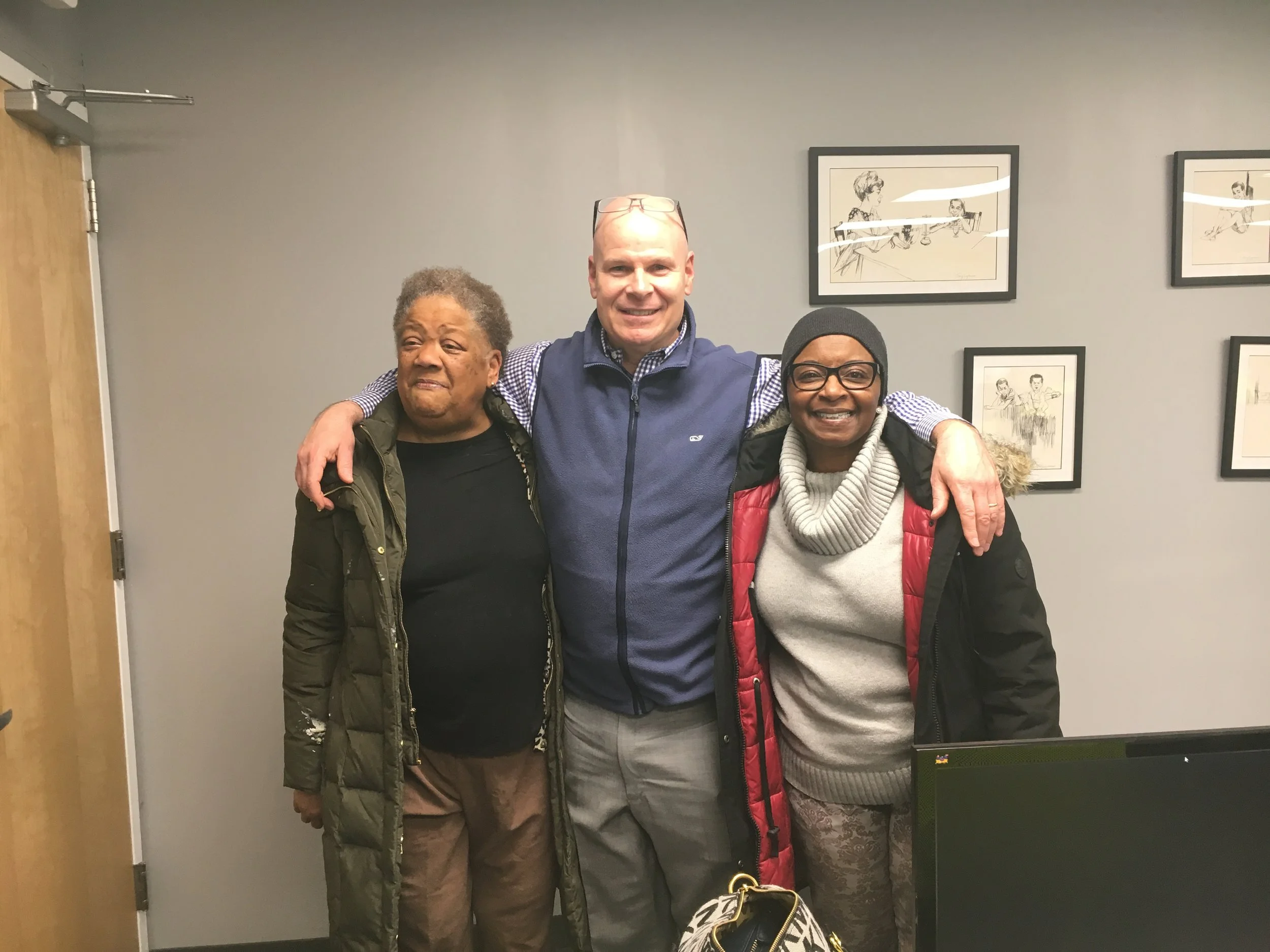
Mark D. Feinberg, Carver donor and longtime volunteer, and a consummate wealth management advisor at Merrill Lynch, held a financial empowerment seminar in the Charlotte Naomi Horblit Technology Center at the Carver Community Center for Carver parents, the community, and Carver staff. Mr. Feinberg shared his insights into wealth building, investments, stocks and bonds, and secrets of the financial industry.
Guests sat among rows of computers with Retina 5K displays as Mr. Feinberg taught from the large touch-screen smart-board at the front of the room. Illustrations from Westport artist, writer and civil rights activist Tracy Sugarman adorned the walls. The technology center is typically used by K-12 kids from across Norwalk for math, reading and science programs. They use the iMacs for creative projects, using GarageBand and other publishing programs.

Mr. Feinberg, a wealth management adviser at Merrill Lynch, made the technology center possible after donating $472,000 to Carver. He made the donation because he said Carver has had a profound affect on him, having served as a camp counselor at the center as a teenager. Feinberg named the Carver Foundation as one of seven charitable beneficiaries of the estate of his late aunt, Charlotte Naomi Horblit of Chestnut Hill, Mass. Horblit was an advocate of educational programs for children.
Breakfast With Champions: Saturday, 1/27/18

Ringing in the New Year!

HOLIDAY FOOD CLASS AT WEST ROCKS MIDDLE SCHOOL!

Why Carver: Breaking down barriers for underrepresented kids could quadruple America’s pool of inventors

What could the future hold for this Carver student? Can we offer her enough opportunity to match her ability? What is society missing by limiting her chances at fulfilling her promise?
See the study here: Who Becomes an Inventor in America? The Importance of Exposure to Innovation
See a good summary of the study by Vox here.
Traditional sources of data on innovation — mostly patents — don’t offer any meaningful information on who is doing the inventing, not even including cursory information about the inventor’s age and gender. But by linking patent application data from 1996 through 2014 to federal income tax returns, the team was able to track inventors’ lives from birth through adulthood to understand who is inventing things and where they come from. And by focusing on the geography of innovation, they show that direct exposure to a culture of invention and to role models appears to be playing a key role.
- Among affluent families, young kids who perform highly on math tests are much more likely to make successful inventions than low-ability kids.
- But this isn't true among low-income families. There, high-scoring and low-scoring kids alike are about equally unlikely to become inventors — suggesting that it isn’t a lack of aptitude that’s holding back poor kids; it’s that aptitude alone isn’t enough.
- Kids are more likely to grow up to be inventors when they grow up in cities with other inventors, which means where you’re born has a lot to do with whether you’ll innovate.
- This holds up even when we look into specific categories of invention. If you grow up in a city full of antenna innovators, you are more likely to innovate regarding antennas — suggesting that early life exposure to relevant networks is important.
- Fascinatingly, the effect is gender-specific — girls are likely to grow up to be innovators only if their city includes an existing stockpile of female innovators (and similarly, male role models for boys), underscoring the importance of role models and self-image.
Particularly fascinating: The geographical aspects hold regardless of where you live as an adult. The Boston area has thriving industrial clusters in both information technology and medical devices. But Boston-area patent-holders who grew up in Silicon Valley are very likely to have computer-related patents, whereas those who grew up in Minneapolis where there’s a robust medical device industry are likely to have medical device patents. In other words, it’s not just that people are likely to work in locally thriving industries — the specifics of childhood experience seem to matter.
The moral of the story seems to be that a reasonably large number of children who have the capacity to grow up to be inventors end up not doing so. Through some mix of their parents’ socioeconomic status, the city where they grew up, and oftentimes their gender, they are prevented from obtaining access to the networks that would have facilitated that life choice.
2017 Carver Community Holiday Party Photos & Video!
Thanks to the 11th grade class of St. Luke's School, Carver offered its annual Community Holiday Party for children and youth throughout Norwalk. Here are all the photos at Facebook. The kids were Merry & Bright as always!


