
On Martin Luther King Jr. Day, we are invited to look back — to remember the courage, sacrifice, and moral clarity of the Civil Rights Movement. But we are also invited to look forward, and to consider how today’s young people understand justice, community, and their role in democracy.
As many observers have noted, the Civil Rights era is no longer the central reference point for how many young Americans think about race, power, and fairness. Most students today are several generations removed from the movement’s defining moments. They are less likely to encounter that history in nightly news broadcasts, and more likely to learn about it through social media, short videos, and conversations shaped by current events.
The result is not indifference — but difference.
For some, that shift has raised concern. Fewer than half of U.S. states require comprehensive teaching of the Civil Rights Movement. At the same time, political battles over how to teach race and history have made civic education uneven across the country.
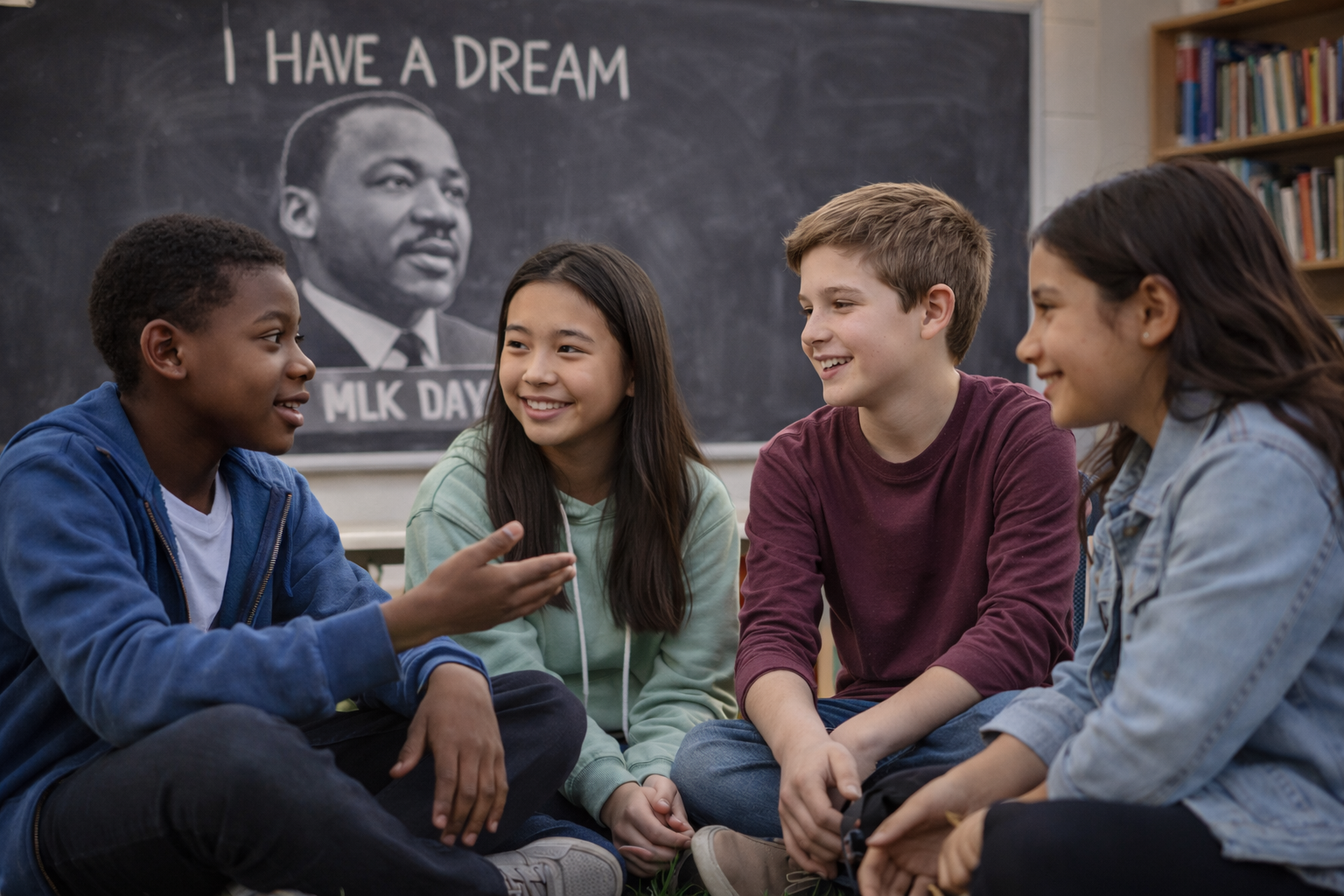
Yet, even as the way history is taught and remembered evolves, young people remain deeply engaged with questions of fairness, belonging, and community. Their causes may look different, their methods may feel new, and their voices may be amplified through platforms their elders never used — but their desire for a more just world is unmistakable.
At Carver, we see this every day.
Our students are curious, outspoken, compassionate, and keenly aware of the world around them. They care about their communities, their peers, and issues that affect their lives — from local concerns in Norwalk to global events they witness online. They may express that concern through conversation, creativity, service, or simply by showing up for one another in meaningful ways.
Carver’s role is not to tell young people exactly how to think about civics, but to create an environment where they feel safe asking questions, sharing perspectives, and practicing being engaged members of their community. Whether through teamwork in the classroom, collaboration in programs, or participation in community life, our students are learning what it means to listen, to lead, and to care.
Today’s youth may not frame their civic stories the same way previous generations did, but that does not mean they are not “doing the work.” They are doing it in ways that reflect their lived experiences, their digital world, and their moment in history.
On this MLK Day, Carver honors that spirit. We honor Dr. King’s legacy not only by remembering his words, but by believing in the potential of the young people who will carry his dream forward — in their own voices, in their own ways, and in their own time.